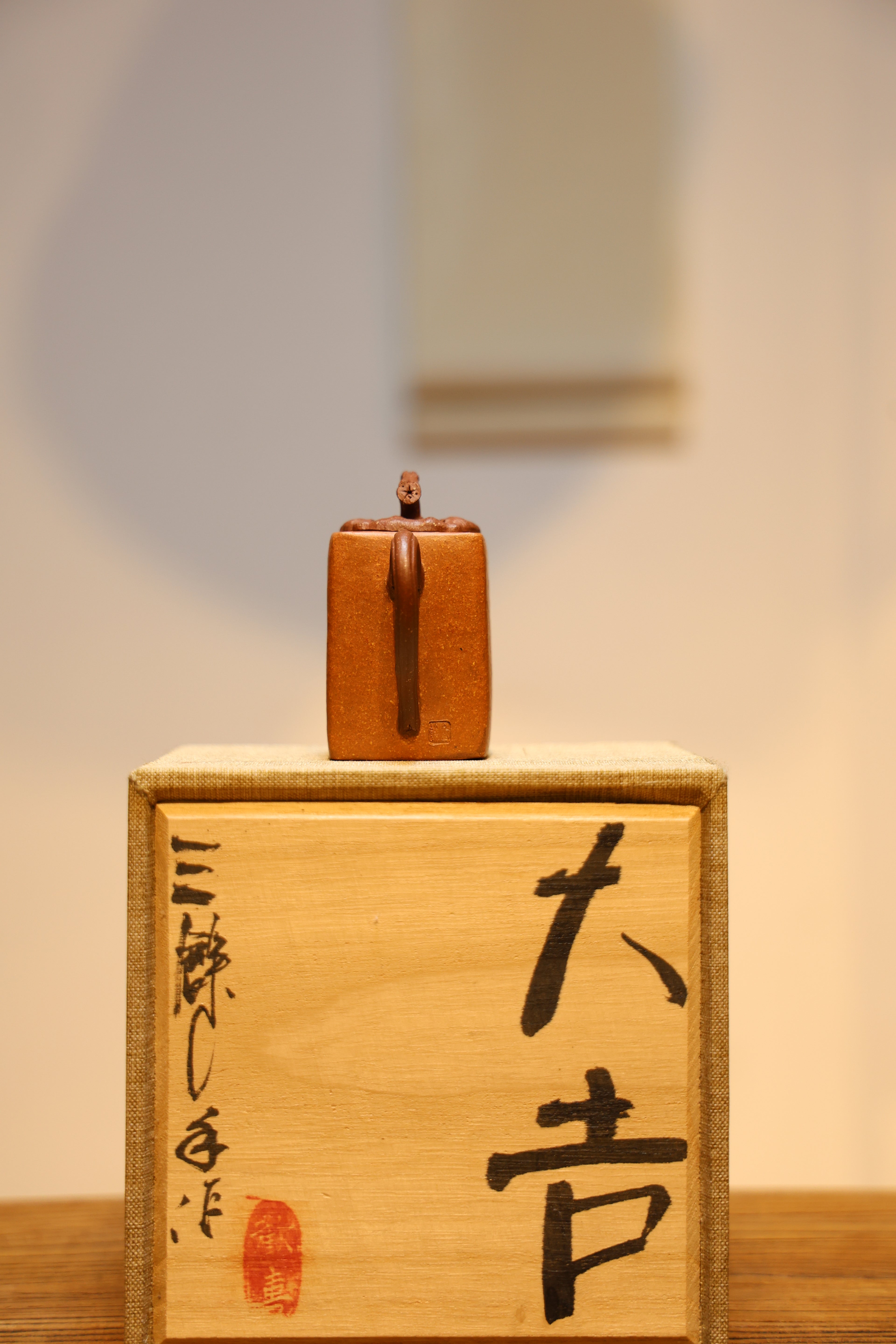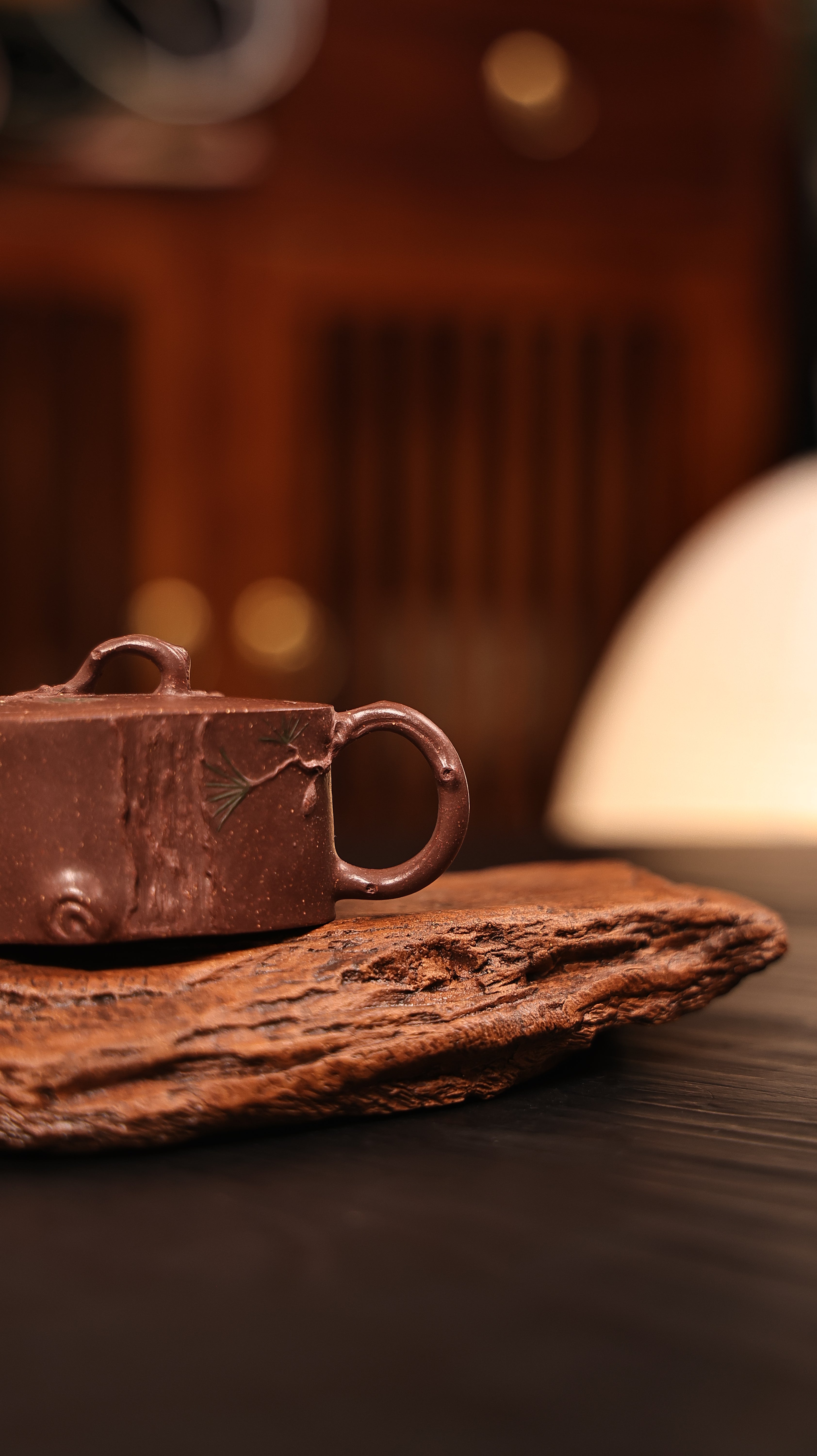
Enduring custom defines Jiangsu pottery via periods,
Reflecting peculiar characteristics gathered amidst provincial heliotrope clays, the urns compound a coating throughout practice, heightening zest gathered from created extracts.
Unveiling Yixing Dregs: Broad Insights into Zisha
Various admirers celebrate the exceptional makeup of Yixing plum clay, a base of time-honored Chinese ceramics. Originating from the Yixing region of Jiangsu province, this notable clay shows an refined mineral blend, whichever imparts outstanding qualities to the realized objects. Categories within Zisha, including Duan Mud, Duan Ni Mud, and Jiang Xi Mud, each has distinct pigments, surfaces, and hardening traits, influencing the openness and the definitive savor development of the liquid.
Mandarin Container Customs: Learning Technique
Sino teapots embody more mere jars for beverage; they represent centuries of customary expertise. From the iconic Yixing clay variations, respected for their transpiring nature which conveys unique nuances to the brew, to the fine porcelain from Jingdezhen, each piece unfolds a tale of craft. The fabrication process is an involved task, often passed down through tribes of masters. These connoisseurs use historic techniques such as hand-building, carving on wheels, and decorating, demonstrating profound reverence for the matter and the art itself. Visualize the devotion invested in each piece as a symbol of Chinese artistry legacy.
- Purple sand flasks: a classic alternative.
- Translucent pottery teapots: valued for their graceful design.
- Constructing techniques: a arduous yet worthwhile procedure.
Zisha Pitcher Preservation: Caring for Your Treasure
Appropriate tending of your precious Yixing Zisha urn is necessary to safeguarding its integrity. Crafted from singular purple sand mineral, these superior teapots mature a complex patina after operation, significantly boosting their allure. Do not use solvents; a easy rinse with warm solution is appropriate. Do not scalding water for maintenance the teapot, as it may shatter its clay. Allow it to fully dry away from powerful ultraviolet exposure. Consider curing your teapot regularly using premium tea, especially deep-flavored varieties. Here is a brief outline:
- Wash off with tepid fluid.
- Resist solvents.
- Give it to dry naturally.
- Cure with premium tea.
History of Yixing Teapots: From Basic Inception
The chronicle of Yixing teapots launches basically during the Zhao dynasty, roughly the 16th interval. Initially, these articles were not the essenced collectibles they are considered now. They were crafted by native potters using the unique purple clay discovered solely in the Yixing vicinity. These early creations were mainly utilitarian, intended for daily use and often ordinary in composition. It was not until the posterior dynasty that they opened to earn renown beyond mere serviceable crafts.
Deciding On the Best Purple Vessel: A Beginner's Manual
Approaching the arena of Yixing teapots can be discouraging, but never doubting! For beginners, the primary factor is understanding the mud. Legitimate Yixing clay is prized for its breathability, allowing the teapot to retain the tea's taste over time, heightening every creating session. Ponder the design; traditional round shapes prevail, yet tailored preferences are important. Lastly, review the finish—while some favor an plain appearance, others like a mild gloss. Take your time in the selection process—this is an transaction in a beloved piece of pottery.
Zisha Jars and Their Contribution on Chinese Beverage Legacy
Zisha pots, hailing from Yixing, China, have profoundly dictated established Chinese tea culture. Those Yixing clay teapots, prized for their unique complexion, consistency, and exceptional ability to impart a subtle taste to the concoction, act as more than mere vessels; they are respected works of art and symbols of greatness. The very process of preparing and serving concoction using a Zisha teapot is steeped in meaning, elevating the experience beyond simple refreshment. Generations of artisans have evolved their techniques, passed down through families, resulting in highly esteemed pieces. As a result, Zisha teapots are frequently held, playing a crucial part in cultivating national appreciation for aesthetics and the ritual of drink ceremonies.
- Singular Clay Composition
- Providing Subtle Flavor
- Ornamental Craftsmanship
Determining Verified Precious Local Pottery
Acquiring a real Yixing teapot can be a gratifying experience, but the arena is often swamped with fakes. Detecting between a legitimate Yixing Teapot antique and a up-to-date reproduction requires exacting inspection. Key signs include the clay's auburn shade, often displaying tiger skin marks, and the shortage of modern firing imprints. The design should exhibit natural refinement, reflecting the traditional Yixing look. Finally, evaluating the artisan's mark is important to verify truthfulness against official citations.
- Assess the clay's surface.
- Look for errors, indicative of crafted quality.
- Employ an consultant for endorsement.
Buying 宜兴 Clay Pots: A Detailed Primer to Zisha Appreciation
The industry of Traditional Zisha pieces shows a noteworthy option for experienced patrons. Growing, the value of these skilled artifacts is contingent by diverse aspects, such as the grade of Zisha, the skill of the builder, the historical importance, and, naturally, the ongoing interest. Starters should emphasize on exploring the multiple classes of Zisha clay—such as Frosted Water, Silent Urn, and Vermilion Dirt—and investigating the traits linked to each. Rigorous appraisal of the object's contour, pigment, and signature is equally important to make astute choices when investing.