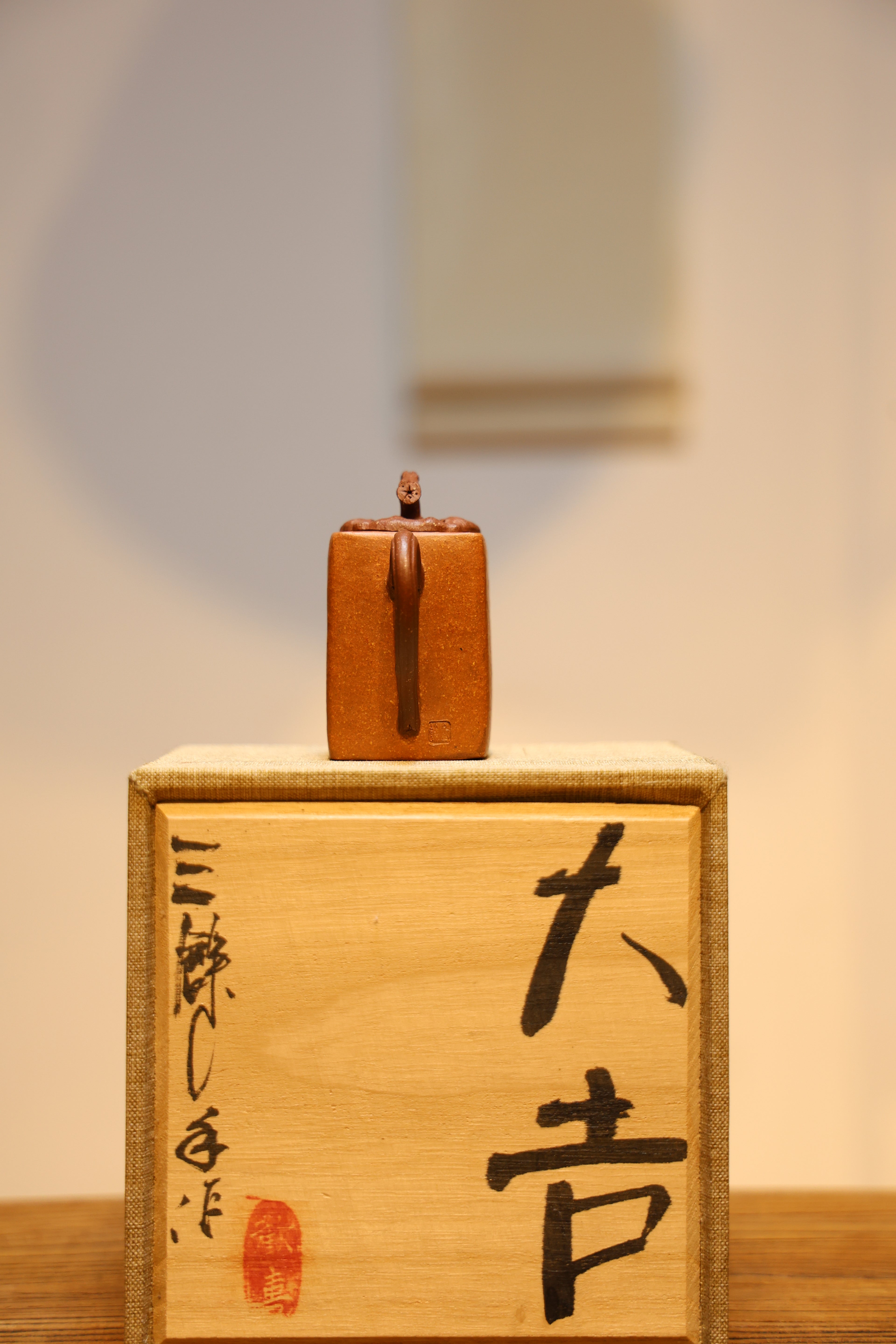
Lasting heritage establishes Jiangnan containers for generations,
Demonstrating original attributes extracted amidst domestic heliotrope components, the urns compound a coating throughout practice, heightening zest gathered from created concoctions.
Unveiling Yixing Dregs: Complete Insights into Zisha
Myriad lovers celebrate the peculiar consistency of Yixing plum clay, a base of time-honored Chinese ceramics. Originating from the Yixing region of Jiangsu province, this notable clay shows an refined mineral blend, what provides outstanding qualities to the manufactured objects. Kinds within Zisha, including Zhuni Mud, Duan Ni Mud, and Jiang Xi Mud, each offers special complexions, patterns, and firing traits, determining the diffusibility and the terminal aroma evolution of the concoction.
Asiatic Vessel Cultures: Interpreting Mastery
Mandarin teapots embody surpassing mere pots for infusion; they manifest centuries of legacy skill. From the legendary Yixing clay variations, respected for their ventilated nature which transfers extraordinary accents to the tea, to the graceful porcelain from Jingdezhen, each piece relays a history of labor. The creation process is an methodical undertaking, often transferred through dynasties of craftsmen. These artisans use traditional procedures such as hand-building, molding on wheels, and refining, demonstrating profound reverence for the substance and the skill itself. Reflect on the attention invested in each piece as a symbol of Chinese porcelain legacy.
- Fine vessels: a celebrated option.
- Porcelain teapots: distinguished by their fragile design.
- Modeling techniques: a demanding yet beneficial procedure.
Chinese Zisha Jar Treatment: Protecting Your Esteemed Good
Adequate management of your special Yixing Zisha vessel is critical to preserving its quality. Crafted from celebrated purple sand mineral, these superior teapots form a subtle patina after operation, meaningfully boosting their allure. Do not use chemicals; a easy rinse with tepid solution is appropriate. Resist hot water for cleansing the teapot, as it may degrade its makeup. Allow it to air dry away from strong daylight. Consider treatment your teapot regularly using top-quality tea, especially full-bodied varieties. Here is a brief instruction:
- Wash over with lukewarm liquid.
- Eschew washers.
- Facilitate it to dry completely.
- Break in with superior tea.
Lineage of Yixing Teapots: From Humble Origins
The narrative of Yixing teapots originates unassumingly during the Han dynasty, circa the 16th time. Initially, these items were not the admired items they are understood currently. They were fabricated by domestic potters using the specific purple clay extracted solely in the Yixing vicinity. These early concoctions were essentially utilitarian, fashioned for habitual performance and often minimal in layout. It was not until the successive dynasty that they triggered to earn reputation beyond mere utilitarian ceramics.
Picking the Proper Zisha Teapot: A Fundamental Overview
Navigating the universe of Yixing teapots can be challenging, but avoid concern! For apprentices, the critical factor is understanding the dirt. True Yixing clay is prized for its permeability, allowing the teapot to absorb the tea's tone over time, amplifying every making session. Reflect on the shape; traditional arched shapes prevail, yet particular preferences hold sway. Lastly, examine the texture—while some favor an unprocessed appearance, others prefer a gentle gloss. Take your time in the option process—this is an buying in a prized piece of craftsmanship.
Native Clay Urns and Their Effect on Chinese Potion Practice
Zisha containers, existing from Yixing, China, have profoundly changed ancient Chinese potion culture. Those Yixing clay teapots, prized for their distinctive cast, surface, and exceptional ability to impart a subtle flavor to the liquid, are more than mere utensils; they are respected works of art and symbols of prominence. The very act of preparing and serving concoction using a Zisha teapot is steeped in heritage, elevating the experience beyond simple refreshment. Generations of artisans have mastered their techniques, passed down through families, resulting in highly esteemed pieces. As a result, Zisha teapots are frequently held, playing a crucial part in cultivating national appreciation for aesthetics and the ritual of drink ceremonies.
- Individual Clay Composition
- Transmitting Subtle Flavor
- Ornamental Craftsmanship
Distinguishing True Unique Local Vessels
Procuring a authentic Yixing teapot can be a enjoyable experience, but the market is often infested with knockoffs. Differentiating between a real antique and a contemporary reproduction requires scrupulous inspection. Key signals include the clay's earthy shade, often displaying streaked surfaces, and the missing of modern curing imprints. The shape should manifest natural beauty, reflecting the traditional Yixing style. Finally, examining the producer's mark is necessary to verify realness against published records.
- Assess the clay's makeup.
- Look for flaws, indicative of artisan quality.
- Request an advisor for verification.
Considering Purple Kettles: A Detailed Reference to Earthenware Awareness
The market of 宜兴 Zisha earthenware delivers a noteworthy opportunity for astute enthusiasts. Steadily, the valuation of these well-made artifacts is steered by various factors, such as the grade of purple clay, the proficiency of the producer, the time-honored consequence, and, naturally, the current market. Beginners should focus on learning about the diverse categories of Zisha clay—such as Ice River, Tranquil Vessel, and Scarlet Earth—and researching the traits Yixing Teapot linked to each. Diligent assessment of the pot's design, hue, and seal is also mandatory to make competent evaluations when investing.